Your Memory Is Lying to You — And Maybe That's the Point
Let's start with a simple question: Does the Monopoly man wear a monocle?
If you said yes — and a surprising number of people do — you're wrong. Rich Uncle Pennybags has never, in the entire history of the game, sported that little eyeglass. No monocle. Not once. And yet, ask a room full of people and watch how many will argue with you about it. Confidently. With full conviction.
Welcome to the Mandela Effect, the internet's favorite rabbit hole, and honestly, one of the most unsettling corners of human psychology — or, if you're feeling adventurous, human experience.
So Where Did the Name Come From?
The term was coined around 2010 by paranormal researcher Fiona Broome, who discovered she wasn't alone in her vivid memory of Nelson Mandela dying in prison during the 1980s. He didn't. Mandela was released in 1990 and went on to serve as South Africa's president before passing away in 2013. But Broome had detailed recollections of news coverage, of a funeral, of a widow's speech. And when she mentioned it online, thousands of people said: same.
That collective moment of "wait, what?" launched an entire subculture. Forums exploded. Reddit threads ran for hundreds of pages. People started cataloguing every shared misremembering they could find, and the list got weird fast.
- The Berenstein Bears? Most people swear it was spelled that way. It's Berenstain.
- "Luke, I am your father." Except Darth Vader never says "Luke." The actual line is "No, I am your father."
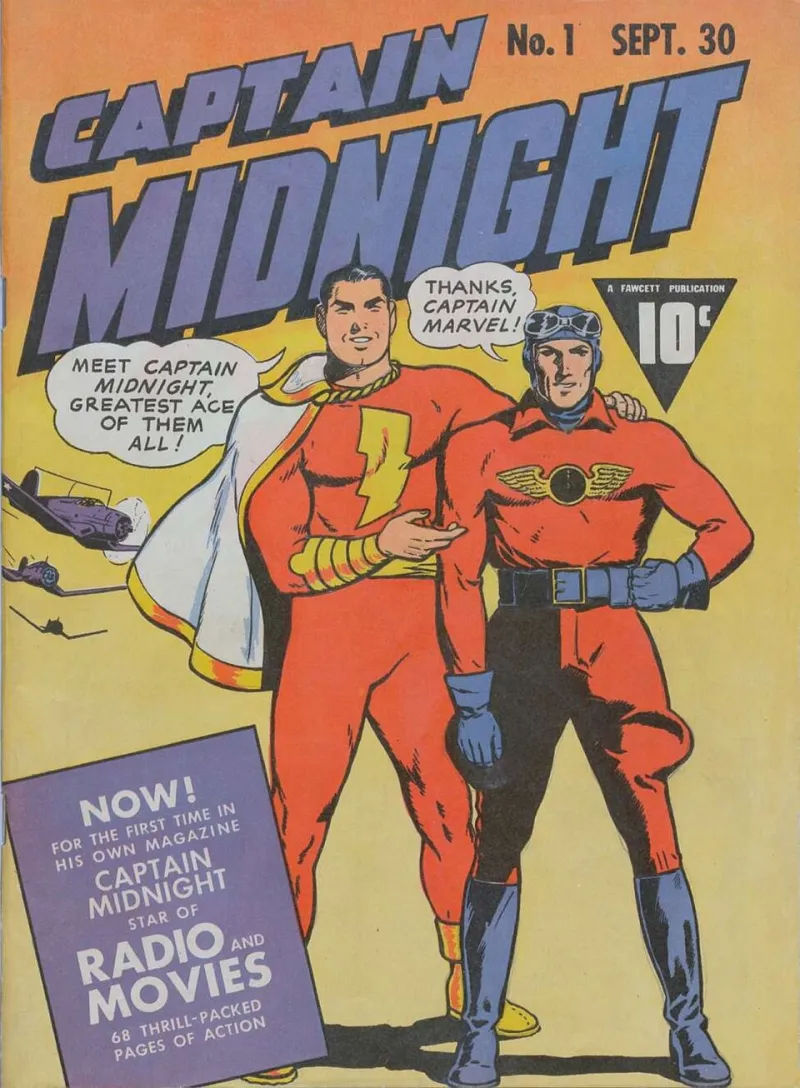
- Sinbad in a genie movie called Shazaam in the '90s? Never existed. (You're thinking of Kazaam, which starred Shaquille O'Neal.)
- Looney Tunes, not Looney Toons. Kit-Kat without a hyphen. Febreze with only one 'e'.
Each one feels minor until you realize you'd have bet money on the wrong version.
The Boring (But Important) Scientific Explanation
Cognitive psychologists have a pretty solid handle on why this happens, and it doesn't require any dimensional rifts. Memory, it turns out, is not a recording. It's a reconstruction — your brain actively rebuilds a memory each time you access it, filling in gaps with logic, expectation, and cultural noise.
Elizabeth Loftus, one of the leading researchers on false memory, has spent decades demonstrating how easily human recollection can be manipulated. In her famous studies, subjects were shown footage of car accidents and then asked questions with slightly different wording. Just changing "smashed" to "hit" altered how fast people remembered the cars were going. In some cases, people "remembered" broken glass that wasn't in the footage at all.
Apply that to a cultural touchstone like Star Wars, and you start to see the problem. "Luke, I am your father" is a more grammatically satisfying construction. It fits how dramatic reveals work in storytelling. So your brain, every time it reconstructs that memory, nudges it toward the version that makes more sense — even if it's wrong.
Add social reinforcement — friends repeating the wrong version, memes, parody sketches — and you've got a feedback loop that bakes the false memory in even deeper.
But Here's Where It Gets Interesting
The scientific explanation is solid. It's probably right. But it doesn't fully scratch the itch of why the Mandela Effect has captured the cultural imagination the way it has, and that's where things get genuinely fascinating from a storytelling perspective.
We live in a post-multiverse-theory pop culture landscape. Audiences have spent decades watching characters slip between realities in everything from Sliders to the entire Marvel Cinematic Universe. We've internalized the grammar of alternate timelines. We know what a dimensional bleed looks like — at least according to Hollywood — and when millions of people share the same "wrong" memory, the multiverse explanation doesn't just feel plausible. It feels familiar.
Science fiction has essentially given us a narrative template for experiences that would otherwise just be embarrassing. Instead of "I misremembered a thing," the Mandela Effect lets people say "I might be from a slightly different version of reality." That's a much better story.
When Entertainment Shapes Belief
This is where 6th Dimension lives — right at the border between imagination and the questions we're actually asking about the world. And the Mandela Effect sits squarely on that line.
Philosophers and physicists have genuinely explored the many-worlds interpretation of quantum mechanics, which theorizes that every quantum event spawns a branching reality. It's legitimate science, even if the pop version tends to get a bit loose with the details. But when that concept filters through Everything Everywhere All at Once, through Dark, through Doctor Strange in the Multiverse of Madness, it doesn't stay in the lab. It becomes a lens people use to interpret their own lives.
The Mandela Effect is, in a very real sense, a story we've collectively decided to tell ourselves. And like all good stories, it says something true about us even if the literal details aren't accurate.
We are uncomfortable with the idea that our memories — the things we use to construct our entire sense of self — are unreliable. We'd rather live in a universe with slightly porous dimensional walls than accept that our brains are just doing their best and sometimes getting it wrong.
The Mystery That Refuses to Die
Researchers like psychologist Chris French at Goldsmiths, University of London, have noted that the Mandela Effect thrives specifically because it's unfalsifiable in the way conspiracy theories often are. You can't prove you didn't come from an alternate timeline. That epistemic escape hatch is part of what makes it so sticky.
But there's something worth sitting with here, beyond the debunking. The fact that millions of people share the same false memories isn't just a quirk — it's a window into how deeply interconnected our cultural experiences are. We all watched the same shows, read the same books, absorbed the same advertising. Our memories don't just belong to us individually. They're partly communal, shaped by shared media, shared references, shared assumptions.
In that sense, the Mandela Effect might be the most honest thing our collective memory does. It shows us exactly where the seams are — where our personal recollection ends and the cultural story we've all agreed to tell begins.
And if that blurs the line between what really happened and what we needed to happen? Well. That's kind of what stories are for.
Curious about more places where reality gets a little slippery? Stick around — at 6th Dimension, that's basically our whole thing.