Dead Media Rising: Why Playing Old Games on Old Hardware Is a Political Act
Somewhere in a college dorm in Ohio, a nineteen-year-old is playing Chrono Trigger on a Super Nintendo she found at a thrift store for twelve dollars. She doesn't have a Netflix subscription. She's not on TikTok. Her Spotify account has been dormant for eight months. Her friends think she's doing a bit. She's not doing a bit.
This is happening more than the tech industry would like you to know about.
The Algorithm Has a Body Count
Let's start with what we're actually rebelling against, because it's worth naming clearly. Modern digital entertainment isn't designed to satisfy you — it's designed to retain you. Streaming platforms optimize for watch time, not quality. Social feeds are engineered to provoke just enough anxiety to keep you scrolling. Game recommendation engines push you toward titles with aggressive monetization loops, not the ones that are simply great.
The cumulative effect of living inside these systems is a specific kind of exhaustion that's hard to articulate but immediately recognizable. You finish a three-hour scroll session and feel like you consumed nothing. You complete a mobile game level and feel vaguely manipulated. You watch an entire series and realize you were never fully present for any of it.
This is what the retro media resurgence is actually a reaction to. Not the past, exactly — but the feeling of having agency over your own attention.
Control as a Feature, Not a Bug
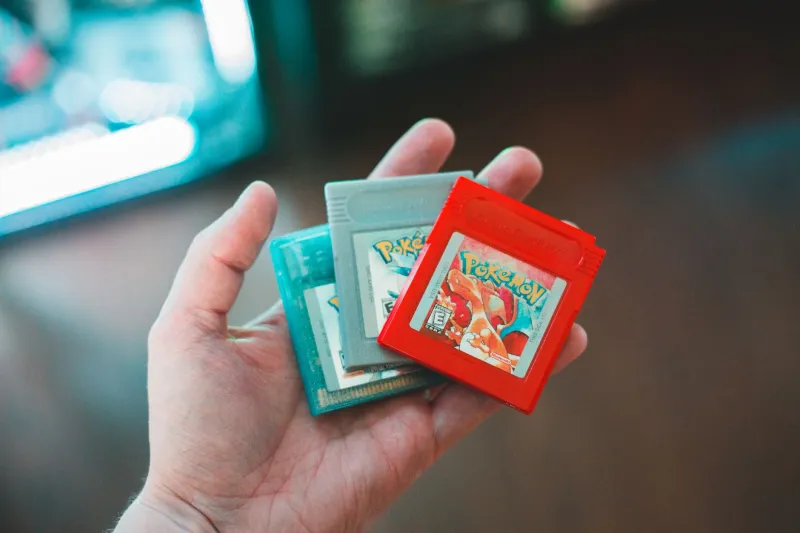
Here's the thing about a Super Nintendo cartridge: it doesn't know who you are. It doesn't track your play patterns. It has no interest in keeping you engaged past your bedtime. It doesn't push notifications. It will not recommend similar content. It simply runs the game, at the pace you choose, for as long as you decide.
That sounds almost absurdly basic. But in 2025, that level of neutrality from a piece of entertainment technology is genuinely rare. Your phone knows more about your emotional state than most of your friends do. Your streaming service can predict what you'll watch next week based on what you paused on Tuesday. Your console dashboard is a billboard.
The Game Boy doesn't care about any of that. And increasingly, that indifference feels like a gift.
It's Not Just Gaming
The pattern extends well beyond video games. Vinyl record sales have outpaced CDs for multiple consecutive years. Film photography communities on Reddit and YouTube are growing, not shrinking. Zine culture is having a legitimate revival among Gen Z creatives. Physical book sales remain stubbornly healthy in an era when every tech prediction suggested they'd be dead by now.
Cassette tapes — cassette tapes — are being bought and played by people who were born after they became obsolete. Not ironically. Actually.
What connects all of these is the same quality: they are technologies that cannot surveil you, cannot be updated to change their behavior, and cannot be taken away by a corporate decision to pull licensing. A cassette you own is yours in a way that a Spotify playlist simply isn't. A physical game cartridge cannot be patched to introduce microtransactions. A zine cannot be algorithmically deprioritized.
The Sixth Dimension of Old Tech
There's something almost science-fictional about this dynamic when you zoom out far enough. We have built the most sophisticated information delivery systems in human history — and a measurable portion of the population is responding by retreating to formats that predate the internet. It's like being handed a teleporter and choosing to walk because at least you know where your feet are taking you.
But maybe that's not irrational at all. Maybe it's the most rational response available to people who have correctly identified that the teleporter has a destination it hasn't told you about.
Retro technology offers something that current platforms are structurally incapable of offering: a finite, bounded experience with no ulterior motive. When you finish The Legend of Zelda: A Link to the Past, it's over. There is no content recommendation waiting on the other side. There is no engagement metric being quietly updated. The experience has a shape, and when you reach the edge of that shape, you stop.
Rebellion Doesn't Have to Be Loud
What's striking about this particular form of cultural resistance is how quiet it is. Nobody's marching. There's no manifesto. It's just people, largely independently of each other, making the private decision to spend their time with technology that treats them like a person rather than a data point.
That's not nostalgia in the sentimental sense. It's closer to what philosophers call "epistemic autonomy" — the right to control the inputs that shape your thinking. When every algorithm is competing to colonize your attention, choosing a medium that has no algorithm at all is a genuinely countercultural move.
The girl in Ohio playing Chrono Trigger isn't living in the past. She's doing something increasingly radical: she's deciding what she pays attention to, and she's doing it entirely on her own terms.
In 2025, that might be the most futuristic thing anyone is doing.