Borrowed Time: Why Gen Z Is Obsessed With Decades They Completely Missed
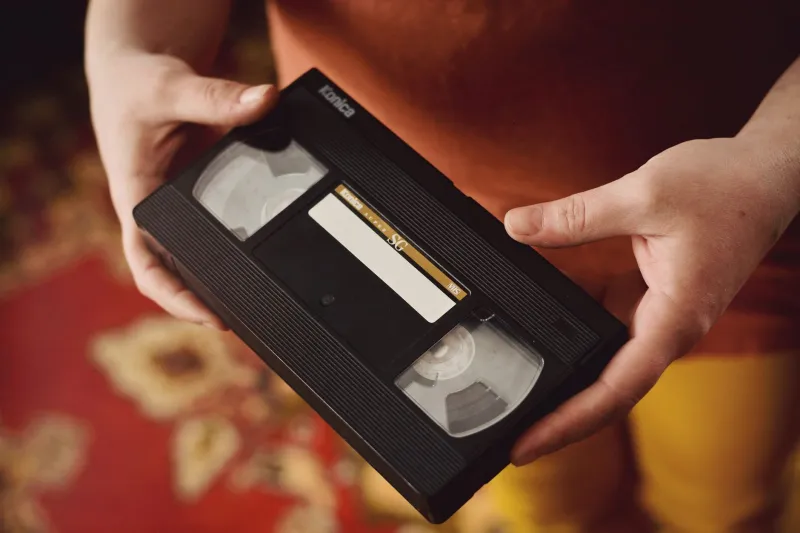
Somewhere in Ohio, a nineteen-year-old is carefully assembling an outfit that reads as 2001 — low-rise jeans, a butterfly clip, a baby tee with an ironic graphic — while listening to a playlist of Y2K pop she wasn't alive to hear on the radio the first time. Her TikTok account is full of VHS-filtered content, references to shows that ended before she started kindergarten, and a general aesthetic vocabulary pulled wholesale from a decade she experienced entirely secondhand.
This is not an isolated quirk. This is a cultural movement. And it's worth asking why.
The Simulation Has No Present Tense
Let's start with the uncomfortable observation that Gen Z is the first generation to grow up entirely inside a media environment so saturated with recycled content that the present moment barely registers as distinct from the past. By the time someone born in 2003 was old enough to start forming aesthetic preferences, the internet was already serving them an undifferentiated stream of now-and-then — 80s synth pop next to current releases, 90s sitcom clips alongside original TikTok content, all flattened into a single eternal scroll.
When everything is equally accessible regardless of when it was made, the concept of "current" culture starts to dissolve. There's no water cooler moment, no shared national experience of watching the same show on the same night. There's just the archive, infinite and undated, and you can pull from any of it at any time.
In that context, it makes a strange kind of sense that younger audiences would be drawn to eras with stronger aesthetic identities. The 70s had a look — earth tones, grain, a specific kind of political paranoia that felt almost cinematic. The early 90s had a texture — flannel, distortion, a slacker ethos that still reads as coherent from thirty years out. Y2K had chrome and optimism and anxiety in equal measure. These decades feel legible in a way that the present moment, still too close and too fragmented to cohere into an aesthetic, simply doesn't.
Nostalgia as Time Travel
There's a term researchers use — vicarious nostalgia — to describe the phenomenon of feeling nostalgic for an era you didn't actually experience. It sounds like a paradox, but the emotional mechanics are real. You can miss something you never had. You can grieve a version of the world you only know from other people's memories.
For Gen Z, this kind of retroactive longing gets fed by an enormous media infrastructure. Stranger Things didn't just entertain — it constructed a fully immersive simulation of 1980s suburban America detailed enough to make people who weren't born yet feel like they were remembering it. Euphoria's costuming department became a Y2K reference guide. Everything Everywhere All at Once wore its 90s immigrant-American texture like a second skin.
These aren't accidents. They're calculated appeals to an audience that has learned to process the past as a form of escape — not from their own memories, but from the present's stubborn refusal to feel as meaningful as history does in retrospect.
And here's the thing about retrospect: it edits. The 70s you access through media are the curated highlight reel — the Scorsese films, the Stevie Wonder albums, the Polaroid warmth. The stagflation, the crime rates, the geopolitical terror are there if you look, but they're not the vibe. Nostalgia, even vicarious nostalgia, runs through a filter. The past gets to be better than it was because nobody has to actually live in it.
The Anxiety Engine
It would be easy and a little condescending to stop there — to say Gen Z is just escapists who can't handle the present. But that framing misses something important.
The present they're escaping from is genuinely difficult to inhabit psychologically. Climate anxiety is not abstract for a generation that will live through the consequences. Economic precarity is structural, not personal. The information environment is actively hostile to stable meaning-making. And the social media platforms they grew up on were, as has been extensively documented, designed to maximize engagement through emotional dysregulation.
In that context, retreating into a decade with a coherent aesthetic identity isn't weakness. It's a coping strategy. It's building a mental space that feels navigable when the actual present doesn't.
What's interesting — and a little poignant — is that the decades Gen Z gravitates toward aren't uniformly happy ones. The 70s paranoia era, with its Watergate disillusionment and conspiracy-thriller cinema, is having a genuine moment right now. So is 90s grunge, which was pretty explicitly a music scene built on dissatisfaction and despair. The appeal isn't pure escapism into uncomplicated joy. It's something more like: at least that era knew what it was.
Authenticity in the Archive
There's a creative dimension to all this worth taking seriously. The Gen Z artists and creators who are most interesting right now aren't just copying the aesthetics of previous decades — they're remixing them, collaging them, using the visual and sonic vocabulary of the past to say things that feel genuinely new.
Vinyl sales, film photography, cassette tapes — all of these analog formats have seen significant revivals driven by young buyers. There's something being sought in the physicality of older media, a resistance to the frictionless ephemerality of streaming everything. A photograph you had to wait to develop carries weight that an iPhone burst mode shot doesn't, even if the iPhone picture is technically better.
This is, at its core, a search for realness. For texture. For things that leave marks.
The Time We Actually Live In
Maybe what Gen Z's retromania is really pointing at is a problem with how we've structured the present. When every moment is documented, filtered, and immediately available for review, nothing settles into the kind of memory that generates genuine nostalgia. You can't miss what you can still scroll back to.
The past they're borrowing from is made of things that are actually gone — discontinued, out of print, existing only in copies of copies. That irretrievability is part of the appeal. It's the first genuinely unstreammable content.
In the 6th Dimension, time has always been a dimension you can move through sideways as well as forward. Gen Z figured that out early, and they're doing it with the only tools available to them: media, memory, and a very good eye for a filter that makes everything look like it happened somewhere more interesting than here.